


Cardio and Strength Training: The Best Combo for Health and Happiness
You’ve probably heard the debate before: cardio vs. lifting. The endurance crowd swears by long runs, the strength world swears by heavy squats, and the rest of us wonder if we’re supposed to pick a side. What if the key isn’t choosing one but combining both?
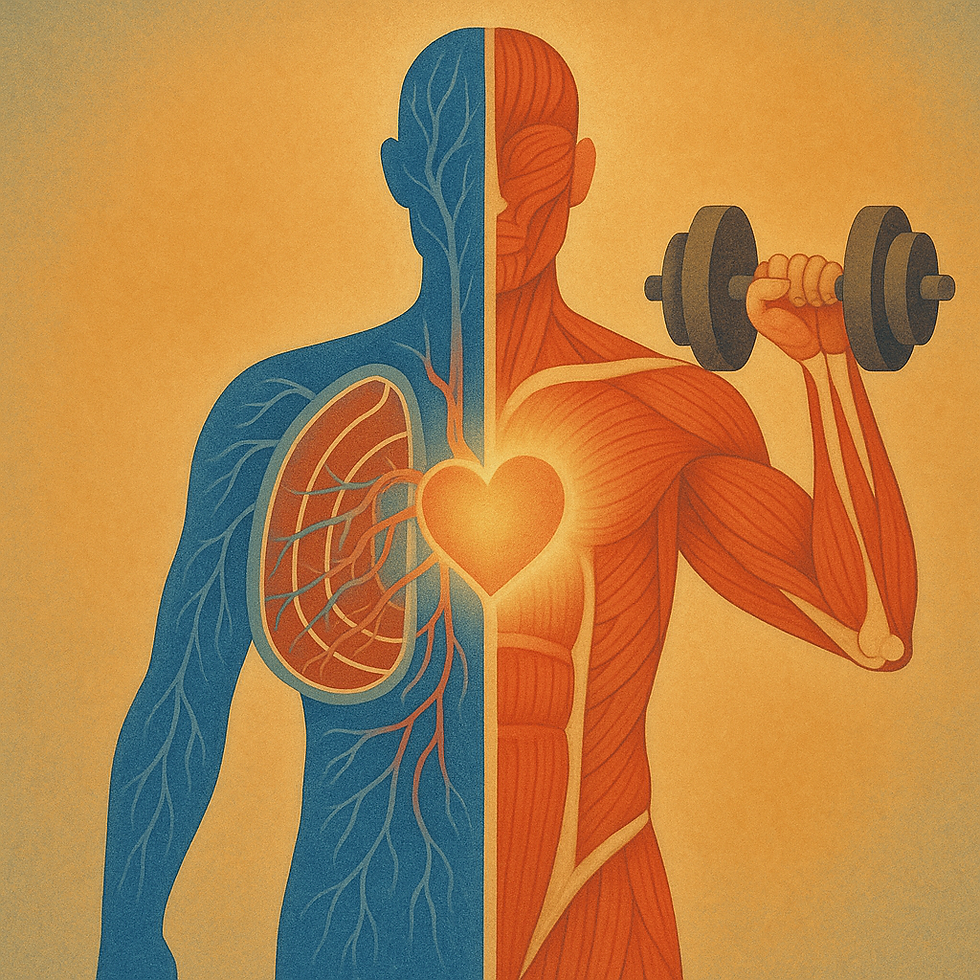
Think of our bodies like a sports car. Cardio is the engine, as in the ability to keep going without sputtering out. Resistance training is the frame, as in the structure that keeps everything stable and lets the engine do its job most efficiently. Neglect one, and the whole car takes a hit. When it comes to health, neglect one, and our whole body feels the pain. Together, they don’t just build fitness; they create a resilient, adaptive nervous system that underpins both physical health and emotional wellbeing.
Why Cardio Alone Feels Incomplete
Cardio, whether it's running, rowing, cycling, swimming, etc., trains the heart and lungs to deliver oxygen more efficiently. This means more endurance, lower resting heart rate, and greater resilience against cardiovascular disease. People who do regular cardio often describe a “lightness” afterward along with clearer thoughts, steadier mood, and a boost of energy that lingers.
That lightness makes sense. Cardio triggers endorphin release and elevates brain-derived neurotrophic factor (BDNF), a protein that supports learning and memory. It’s partly why a jog can lift mood or clear brain fog. Yet cardio alone leaves gaps. Without resistance work, muscle mass and bone density quietly decline, metabolism slows, and injuries creep in. The engine may run smoothly, but the frame weakens. Cardio fuels stamina and mental clarity, but it can’t fully protect the body’s scaffolding.
Why Resistance Training Alone Feels Incomplete
Step under a barbell, and something different happens. Resistance training strengthens not just muscles but connective tissues, bones, and even the nervous system’s ability to control our body That’s why someone who lifts regularly often moves with stability and confidence, even outside the gym.
Neurologically, resistance training also sharpens focus and enhances dopamine signaling, giving effort a sense of reward. The drawback though is that heavy lifting spikes blood pressure during exertion, and without the aerobic adaptations from cardio, our cardiovascular system remains undertrained. The body becomes powerful in short bursts but fatigues more quickly over sustained effort. Resistance training builds structure and power, but without cardio, endurance and cardiovascular resilience remain underdeveloped, preventing us from reaching full potential.
Biology of Combining the Two
The magic happens when the systems overlap. Cardio primes the vascular network, making nutrient and oxygen delivery more efficient. Resistance training builds the tissue that uses those resources more effectively. Together, they create what exercise physiologists call concurrent training adaptations, which is a state where the heart, lungs, muscles, and nervous system all scale up in harmony.
On the hormonal side, cardio tempers cortisol spikes, while resistance training elevates testosterone and growth hormone. This combination creates not just better recovery but also improved mood stability. We don’t just feel fitter—we feel more grounded and present throughout the day.
Psychologically, blending both forms teaches effort regulation. Cardio cultivates patience and pacing, while resistance training teaches intensity and focus. The nervous system learns to switch between sustained output and maximal bursts, a skill that translates into work, parenting, and everyday stress. Cardio plus resistance helps us create balance, leading to an adaptable system that’s more resilient to all forms of stress.
Happiness as a Biological State
We don’t usually link happiness directly with physical training, but the connection is real…even though during a grueling workout “happy” might be the last word that comes to mind. Happiness isn’t just a mental state; it’s a regulated nervous system. Cardio’s endorphins and BDNF foster cognitive flexibility and mood stability. Resistance training’s dopamine release and muscle growth promote confidence and a sense of capability. Together, these adaptations reshape how we experience daily life.
Even more compelling, research shows that people who combine aerobic and resistance training report higher life satisfaction scores compared to those who do one or the other. Working out regularly helps prevent disease, but it’s more about creating a baseline physiology that makes joy more accessible. Happiness is affected by countless forces, but a major part is the underlying biology of the emotion, and by training, we better shape that biology.
How Much Is Enough?
Depending on our goals, sports, work, lifestyle, etc., “enough” can mean a lot of different things. We’ll stick to the science here though on the minimum amount of training needed to lock in improvements. It doesn’t take hours every day. Studies suggest that 150 minutes of moderate cardio per week (i.e. ~Zone 2/3 Heart Rate) plus two resistance sessions is enough to reap most benefits. That could look like a brisk walk most days, paired with two full body gym sessions.
Importantly, the blend matters more than perfection. A cyclist adding one day of lifting sees big gains in bone density. A lifter adding one run a week improves cardiovascular markers. Small overlaps compound quickly. We don’t need to train like a pro if we don’t want to. We just need to mix the right amounts of the right ingredients.
Reframing Cardio and Strength Training
The true win of combining cardio and strength training isn’t about looking a certain way (even though that's a really nice benefit). It’s about building a system that can better handle life. Carrying groceries without pain, playing with kids without fatigue, running up stairs without gasping, recovering from stress without unraveling. These are happiness multipliers, not just fitness milestones. Sometimes the best wins from training are the small pieces like these that we may take for granted.
Instead of asking “Which is better, cardio or lifting?” the more powerful question is: “How do I train my system to do both?” In the end, the happiest, healthiest bodies are balanced.
References
Pedersen, B. K., & Saltin, B. (2015). Exercise as medicine—evidence for prescribing exercise as therapy in 26 different chronic diseases. Scandinavian Journal of Medicine & Science in Sports.
Schuch, F. B., et al. (2016). Exercise as a treatment for depression: A meta-analysis adjusting for publication bias. Journal of Psychiatric Research.
Phillips, S. M., & Winett, R. A. (2010). Uncomplicated resistance training and health-related outcomes: Evidence for a public health mandate. Current Sports Medicine Reports.
Davidson, L. E., et al. (2009). Effects of exercise modality on insulin resistance and functional limitation in older adults. Archives of Internal Medicine.
Raichlen, D. A., & Alexander, G. E. (2017). Adaptive capacity: An evolutionary neuroscience model linking exercise, cognition, and brain health. Trends in Neurosciences.


