


Why Chronic Illness Rates Are Rising Despite Massive Leaps in Health Technology
On paper, we should be the healthiest humans in history. We carry supercomputers in our pockets, track every heartbeat and sleeping minute, and have access to diagnostics so advanced they can detect disease before we ever feel symptoms. Despite this, rates of chronic fatigue, autoimmune disorders, metabolic disease, anxiety, and burnout continue to climb. It’s the paradox of modern health: unprecedented knowledge paired with unprecedented dysregulation.
This contradiction almost feels personal, as it should because it affects all of us. How can someone eat well, train regularly, use the latest devices, and still wake up exhausted? How can medicine advance, yet our bodies feel increasingly left behind? The challenge is that chronic disease rarely emerges from a single catastrophic moment. More often, it arises from environments our biology wasn’t designed to navigate; ones that overstimulate the mind, underload the body, compress recovery, and stretch the stress-response system across every waking hour.
The underlying thread is easy to miss: society and technology have changed much faster than the human nervous system, and the gap between the two is often where chronic illness grows.
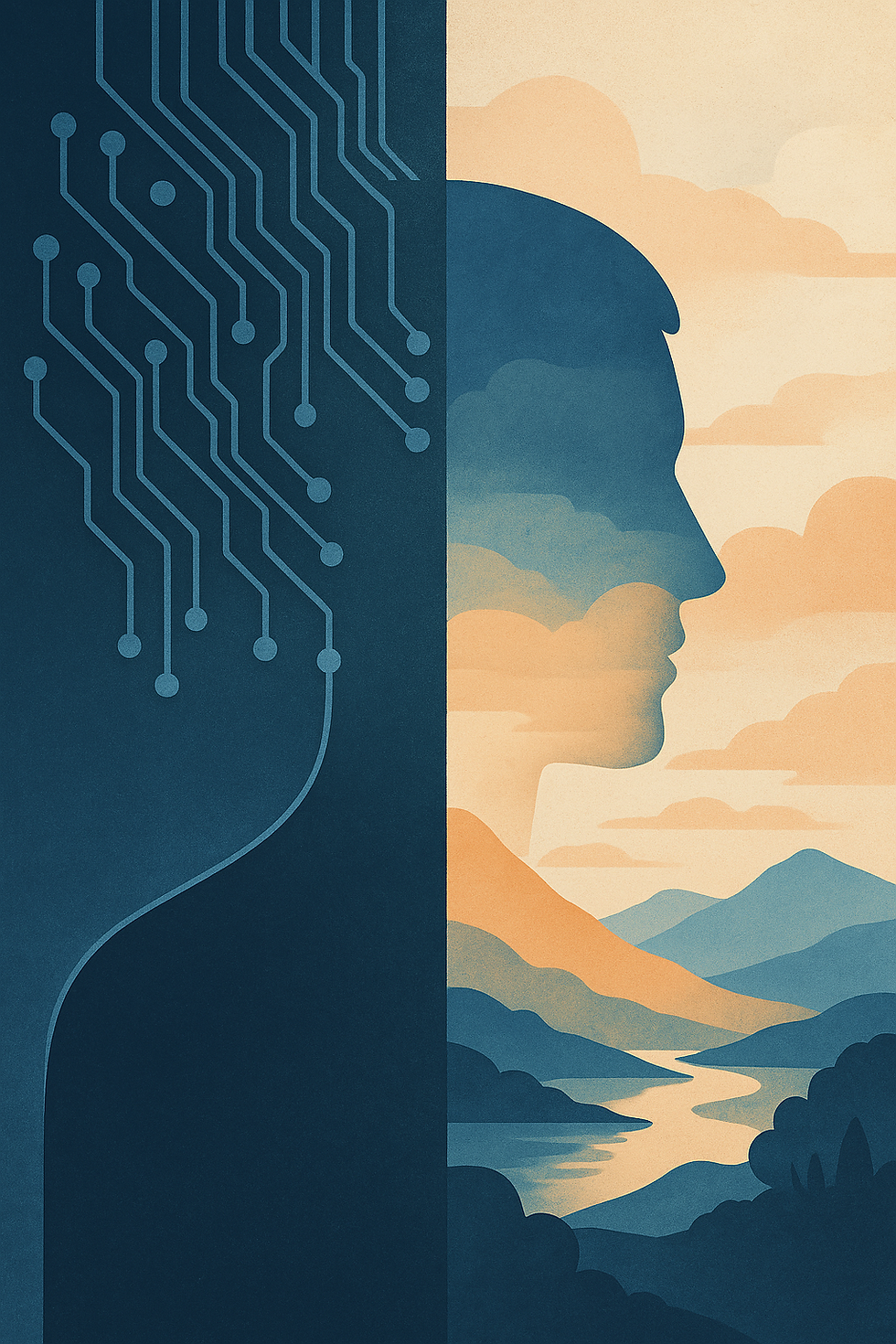
What Happens When We Remove Physical Load but Multiply Cognitive Load?
One of the first mismatches shows up in fatigue. A century ago, exhaustion was largely physical. Today, many of us end our day feeling drained without ever lifting anything heavier than a laptop. The brain is an energy-intensive organ, and when cognitive load rises, the body experiences physical fatigue even in the absence of physical strain.
The modern environment demands constant micro-decisions, emotional regulation, and digital attention shifts. Meanwhile, moving our bodies, which buffers stress, must be intentionally planned into the schedule or it falls away; that’s assuming we have the luxury to find that extra time in the day. The result is a nervous system that is metabolically overclocked and physiologically under-stimulated. A body built for movement now spends most of its energy on vigilance.
When cognitive demand becomes the dominant form of “work,” the brain burns through neurotransmitters, glucose, and regulatory capacity at a pace no wearable or productivity app can offset. Fatigue stops being a response to effort and becomes a permanent setting.
The Stress System Is Not Meant to Be the Default
Humans evolved to handle acute stress such as a threat, a chase, or a conflict that then led to a resolution. The stress cycle had a beginning and an end. Modern stress, however, rarely resolves. Deadlines, notifications, social comparison, financial pressure, and a 24/7 digital environment create stress without closure. Over time, cortisol stays elevated, not because the system is “malfunctioning,” but because it’s adapting to chronic conditions it interprets as threat.
Allostatic load, which is the accumulated wear and tear from keeping the body prepared for action, quietly increases. Even moments of rest don’t feel restful because the biological gear never fully shifts out of drive.
Technology has made tasks easier but expectations heavier. Faster output becomes the baseline, efficiency becomes identity, and rest becomes optional. In this kind of environment, our biology suffers collateral damage.
We’ve Become Masters at Overriding Fatigue
One of the most profound shifts in modern health is not just the amount of stress we carry, but the way we override it. We’ve become quite good at utilizing willpower, caffeine, adrenaline, and ambition to overshadow our body’s healthy capacity.
These tools work dangerously well. They let us push past natural limits, often with pride, and performance even improves for a while. Underneath that surge though, the system is borrowing energy it never had, eventually leading to a major crash if we don’t course correct.
The nervous system, once supportive, becomes defensive instead. Chronic illness often begins with subtle shifts rather than dramatic burnout, showing up initially as a little more fatigue, a little less clarity, or a negligibly lower biometrics. The system whispers long before it finally collapses.
The Silent Driver of Chronic Dysregulation
Humans regulate each other biologically. It’s validated and measurable. Heart rhythms synchronize, stress hormones drop in the presence of trusted people, and oxytocin rises when we feel safe and seen. These mechanisms were once a cornerstone of daily life, with families living together, communal work, play, and rest. That’s not to say all of us have lost this, but modern culture has increasingly separated us into individual units, each forced to self-regulate a system designed for co-regulation. We even find many people who are surrounded by others, yet largely feel unsupported.
Loneliness, even subtle forms of it, increases inflammatory markers, impairs vagal tone, and raises the risk of nearly every chronic condition. This isn’t emotional weakness. It’s a biological process that is running without its external regulators.
Technology connects us informationally while disconnecting us biologically. That tradeoff shows up in our health long before we realize it.
Recovery Now Requires Intention
This may be the most overlooked shift. Historically, recovery was built into daily rhythms, often signified by the sun setting, work ending, environments quieting, or communities unwinding together. Now, true recovery tends to be something we must choose, schedule, or prioritize, often against cultural pressure.
Stillness isn’t passive; it’s an active state where the nervous system recalibrates, hormones rebalance, and the brain clears metabolic waste. The environment most of us live in is designed for stimulation, not stillness. Without intentional disengagement, the nervous system never receives the signal saying “You are safe enough to repair.”
Even awe, which is a natural parasympathetic reset, has become rare. Many people spend more time looking down at screens than up at landscapes, art, architecture, or the night sky. The biology of wonder goes unused. Just getting out in nature itself is an incredibly impactful tool but increasingly underutilized. Chronic illness has a much higher chance of emerging when recovery becomes the exception rather than the rule.
Adaptation Isn’t the Enemy
Adaptation is our armor. A system under chronic threat adapts by prioritizing inflammation (protection), vigilance (survival), energy conservation (fatigue), and emotional reactivity (rapid response). These shifts are intelligent responses to mismatched inputs. Chronic illness is often the body’s attempt to protect itself from a world moving too fast for its ancient wiring.
The body isn’t breaking. It’s implementing what it thinks it needs, which unfortunately leads to maladaptation.
So Why Is Chronic Illness Rising Despite Better Technology?
Technology is largely built to improve treatment, but our environment shapes biology. Chronic illness increases when:
Cognitive load outpaces our capacity
Stress becomes a continuous signal
Recovery becomes optional
Artificial stimulation replaces natural rhythms
Connection decreases
Adaptation is forced into defensive modes
We’ve optimized everything except the conditions our biology needs to thrive.
The Path Forward Isn’t More Control
Fortunately, human biology is remarkably willing to re-regulate when given the right cues. Small shifts such as real rest, real connection, real stillness, and real awe have disproportionate physiological impact. These aren’t lifestyle tips. They’re biological requirements for a better life.
Modern health isn’t about defeating chronic illness through force or technology. It’s about recognizing that the nervous system isn’t outdated, but the environment is, at least our perception of it. Align the two, and resilience re-emerges not as a goal but as a side effect.
References
McEwen, B. S., & Gianaros, P. J. (2011). Stress and allostasis-induced brain plasticity. Annual Review of Medicine.
Sapolsky, R. M. (2004). Why Zebras Don’t Get Ulcers.
Arnsten, A. F. T. (2009). Stress signaling pathways and prefrontal cortex function. Nature Reviews Neuroscience.
Drake, C. L., et al. (2010). Caffeine effects on sleep. Journal of Clinical Sleep Medicine.
Stellar, J. E., et al. (2015). Awe and physiological well-being. Emotion.
Kivimäki, M., et al. (2015). Long working hours and chronic disease. The Lancet.


